Information about our curriculum is available below. Also please visit our class pages for even more information include long-term plans.
Curriculum Subjects
Curriculum
Phonics
At St Patrick’s Catholic Primary School, we believe that all our children can become fluent readers and writers. This is why we teach reading through Little Wandle Letters and Sounds Revised, which is a systematic and synthetic phonics programme. We start teaching phonics in Nursery/Reception and follow the Little Wandle Letters and Sounds Revised progression, which ensures children build on their growing knowledge of the alphabetic code, mastering phonics to read and spell as they move through school.
As a result, all our children are able to tackle any unfamiliar words as they read. At St Patrick’s Catholic Primary School, we also model the application of the alphabetic code through phonics in shared reading and writing, both inside and outside of the phonics lesson and across the curriculum. We have a strong focus on language development for our children because we know that speaking and listening are crucial skills for reading and writing in all subjects.
Reading
At St Patrick’s RC Primary School we see Reading as an essential life skill and are committed to enabling our children to become lifelong readers. Our aims in teaching Reading include the following:
• To foster a positive attitude to literacy as an interesting and exciting part of the curriculum.
• To raise the standard of literacy across the school, for children of all abilities.
• To enable pupils to express and communicate meaning in spoken language, listening to and
interpreting what others say and matching style and response to audience, context and purpose.
• To provide pupils with a range of relevant and purposeful opportunities to develop their ability
to read, understand and engage with various types of text for enjoyment and learning.
• Apply their knowledge and understanding of phonics, spelling patterns and rules, grammar and
punctuation to reading and writing opportunities across the curriculum.
• To enable children to write effectively, using a cursive, joined handwriting style and showing a
development in fluency; making and shaping different texts appropriately, according to context,
purpose, reader or audience.
• Develop a technical vocabulary with understanding of grammatical terminology.
• Learn how to apply grammatical terminology in their own writing.
Writing
SPAG
Useful Websites
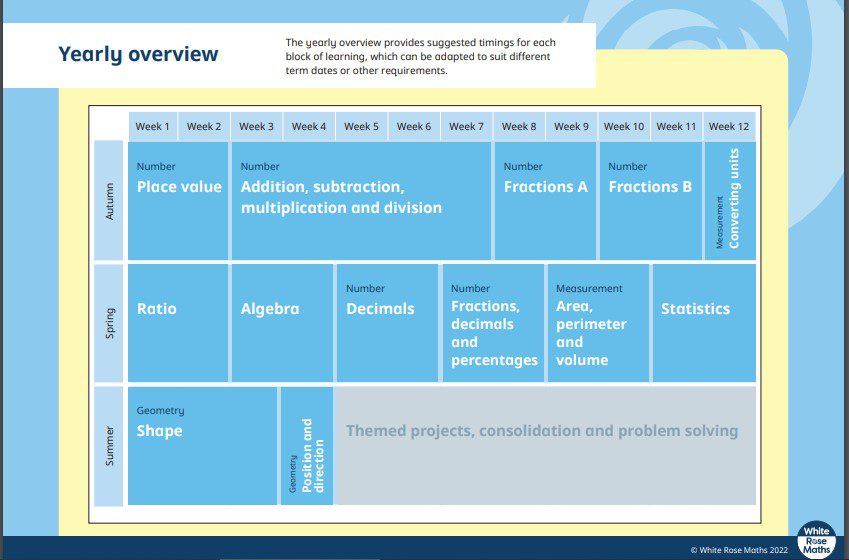
At St Patrick’s RC Primary School we have adopted a mastery approach for the teaching of mathematics, following the White rose maths scheme of work. Underpinning this pedagogy is the belief that all children can achieve in maths. We believe in promoting sustained and deepened understanding by employing a variety of mastery strategies, with teaching for conceptual understanding at the heart of everything we
do. We aim to create independent mathematicians who are well equipped to apply their learning to the wider world.
Teaching for Mastery aims to provide all children with full access to the curriculum, enabling them to achieve confidence and competence – ‘mastery’ – in mathematics, rather than many failing to develop the maths skills they need for the future.
Key features of our Maths Mastery curriculum:
High expectations for every child
Fewer topics, greater depth
Number sense and place value come first
Research -based curriculum
Objects and pictures always before numbers and letters
Problem solving is central
Calculate with confidence– understand why it works
Mathematics Mastery places emphasis on the cumulative mastery of essential knowledge and skills in mathematics. It embeds a deeper understanding of maths by utilising a concrete, pictorial, abstract approach so that pupils understand what they are doing rather than just learning to repeat routines without grasping what is happening. St Patrick’s mastery curriculum is taught using the ‘White rose Maths’
scheme of learning.
Maths Policy
Reception overview
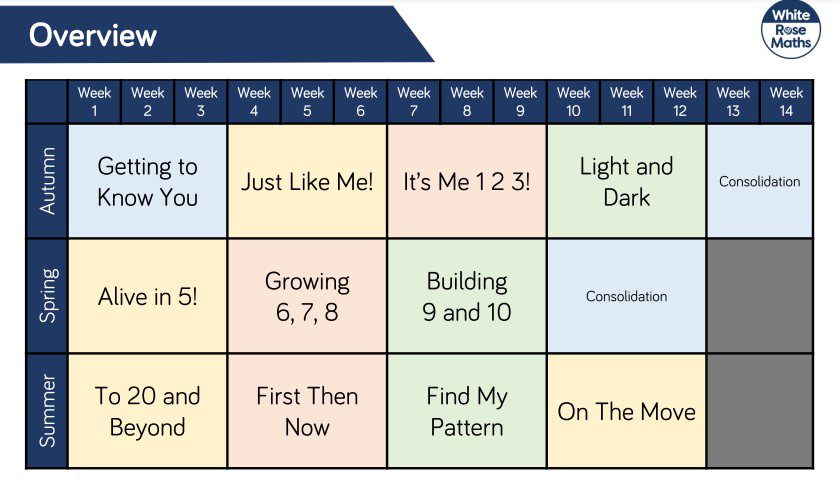
Year 1 Overview
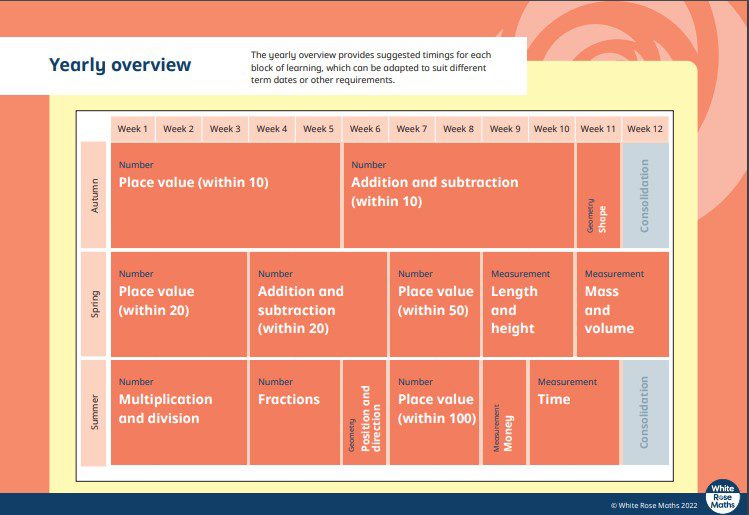
Year 2 overview
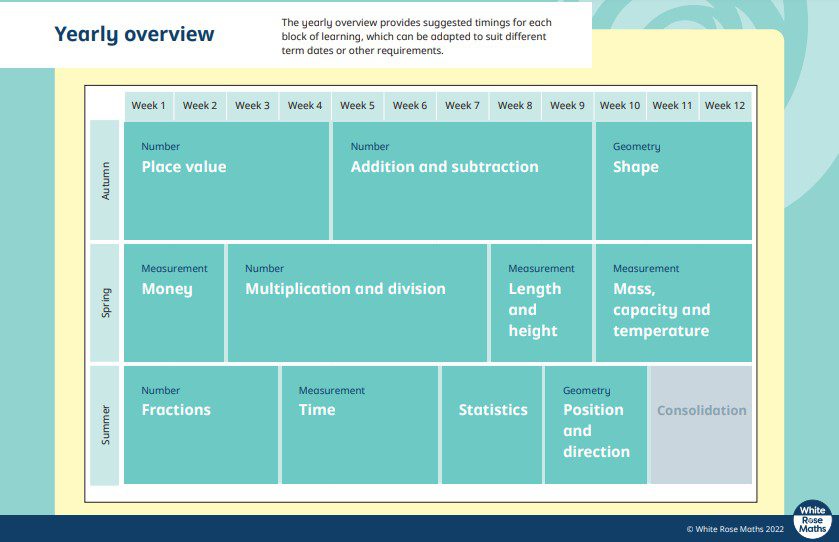
Year 3 Overview
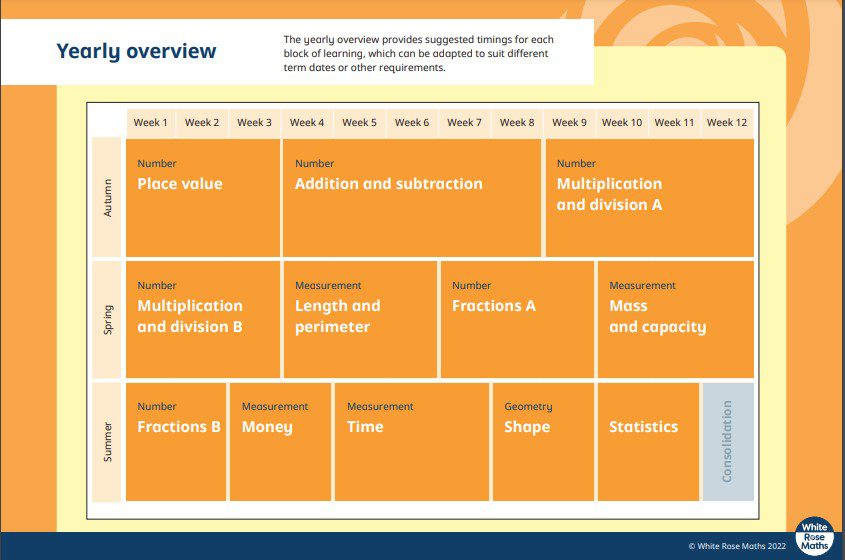
Year 4 Oveview
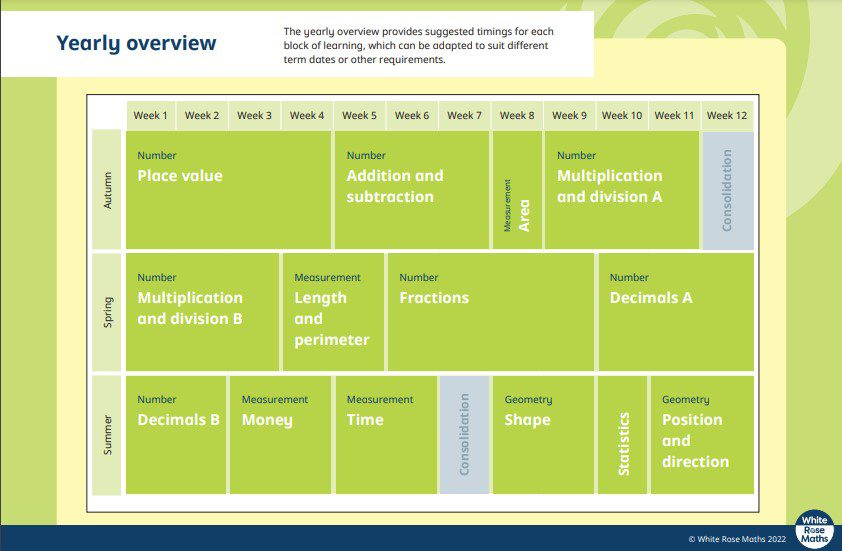
Year 5 Overview
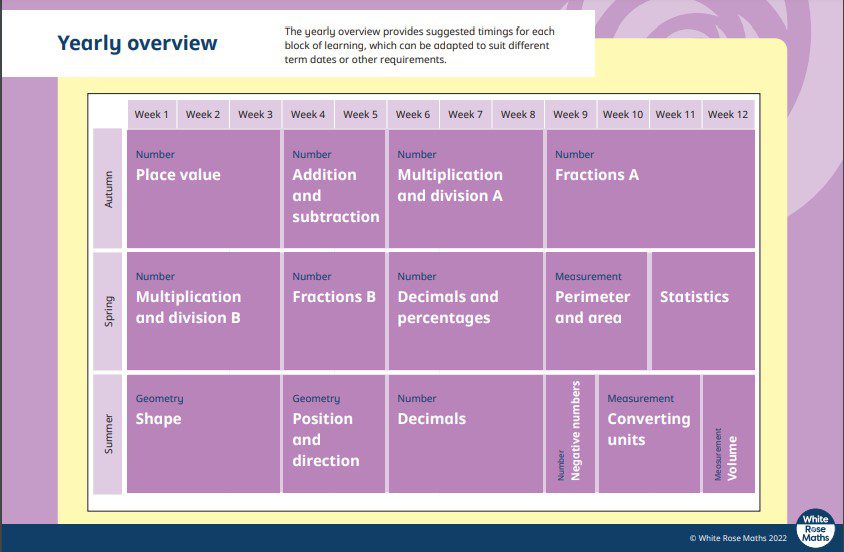
Year 6 overview
Useful Documents
Helping Children with Mathematics Year 5 Year 6
T M 30758 Year 6 Percentages Maths Knowledge Organiser Ver 9
T2 M 254741 Year 5 Converting Units Maths Knowledge Organiser Ver 1
T2 M 254819 Year 6 Number And Place Value Maths Knowledge Organiser English Ver 3
T M 3728 Year 6 Four Operations Maths Knowledge Organiser Ver 5
T M 3835 Year 5 Perimeter And Area Maths Knowledge Organiser Ver 5
The National Curriculum states that:
Science is a core subject in the National Curricula (for England, Wales and
Northern Ireland).
In England, it has four attainment targets and a statement of breadth of study.
These are:
Sc1 Scientific enquiry;
Sc2 Life and living processes;
Sc3 Materials and their properties;
Sc4 Physical processes.
Our role is to teach scientific enquiry through the contexts of the three main content areas. The
breadth of study statement in the National Curriculum is concerned with issues such as the use of
ICT, scientific language and health & safety.
Children in the foundation stage – the reception class(es) – are taught the science elements of the
foundation stage document through the EarlyLearning Curriculum: Knowledge and Understanding of
the World.
The targets are:
Sc1 Scientific enquiry;
Sc2 Life processes and living things;
Sc3 Materials and their properties;
Sc4 Physical processes,
plus Focus statements.
Aims
Science is a body of knowledge built up through experimental testing of ideas. Science is also
methodology, a practical way of finding reliable answers to questions we may ask about the world
around us. Science in our school is about developing children’s ideas and ways of working that
enable them to make sense of the world in which they live through investigation, as well as using
and applying process skills.
We believe that a broad and balanced science education is the entitlement of all children, regardless
of ethnic origin, gender, class, aptitude or disability.
Our aims in teaching science include the following.
Preparing our children for life in an increasingly scientific and technological world.
St. Patrick’s Catholic Primary School
2 |Page ST PATRICK’S PRIMARY SCHOOL | Science Policy
Fostering concern about, and active care for, our environment.
Helping our children acquire a growing understanding of scientific ideas.
Helping develop and extend our children’s scientific concept of their world.
Developing our children’s understanding of the international and collaborative nature of
science.
Attitudes
Encouraging the development of positive attitudes to science.
Building on our children’s natural curiosity and developing a scientific approach to problems.
Encouraging open-mindedness, self-assessment, perseverance and responsibility.
Building our children’s self-confidence to enable them to work independently.
Developing our children’s social skills to work cooperatively with others.
Providing our children with an enjoyable experience of science, so that they will develop a
deep and lasting interest and may be motivated to study science further.
Skills
Giving our children an understanding of scientific processes.
Helping our children to acquire practical scientific skills.
Developing the skills of investigation – including observing, measuring, predicting,
hypothesising, experimenting, communicating, interpreting, explaining and evaluating.
Developing the use of scientific language, recording and techniques.
Developing the use of ICT in investigating and recording.
Enabling our children to become effective communicators of scientific ideas, facts and data.
2. Our teaching aims
* Teaching science (National Curriculum Science Orders or equivalent) in ways that are imaginative,
purposeful, well managed and enjoyable.
* Giving clear and accurate teacher explanations and offering skilful questioning.
* Making links between science and other subjects.
Scheme of Work
Knowledge Organisers
Useful Links
Support for parents and carers to keep their children safe online includes:
- Internet matters – for support for parents and carers to keep their children safe online
- London Grid for Learning – for support for parents and carers to keep their children safe online
- Net-aware – for support for parents and careers from the NSPCC
- Parent info – for support for parents and carers to keep their children safe online
- Thinkuknow – for advice from the National Crime Agency to stay safe online
- UK Safer Internet Centre – advice for parents and carers
Nursery and Reception have outdoor opportunities on a daily basis. In addition to this Reception have a taught PE lesson once per week. All other classes have two taught PE lesson of an hour per week (children bring their PE kits to school and get changed).
The areas of physical activity (games, gymnastics, dance, athletics, swimming and outdoor activities) are set out in the Foundation Stage Curriculum and National Curriculum 2014. The PE curriculum at St Patrick’s is based on these requirements and is detailed on the long term year planner. St Patrick’s have adopted PE Resources from ‘Get set for PE’. Each year group will learn PE in accordance with the long term planning. This will ensure continuity and progression through school in order to continue to improve standards in PE.
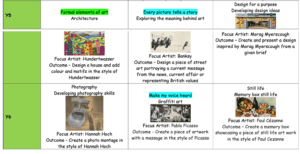
At St Patrick’s RC Primary School, we have developed an expressive Art and Design approach where children are allowed to show their individual expression and creativity through a variety of media following the scheme KAPOW to support. We aim for children to have the creative expression which promotes the articulation of feelings and thoughts through an enjoyable and physically active manner contributing to children’s personal development in creativity, independence and self-reflection.
The National Curriculum states that:
“Art, craft and design embody some of the highest forms of human creativity. A high-quality art and design education should engage, inspire and challenge pupils, equipping them with the knowledge and skills to experiment, invent and create their own works of art, craft and design. As pupils progress, they should be able to think critically and develop a more rigorous understanding of art and design. They should also know how art and design both reflect and shape our history, and contribute to the culture, creativity and wealth of our nation.”
Key features of our Art and Design curriculum:
At St Patrick’s RC Primary School our curriculum for art and design aims to ensure that all pupils:
- Produce creative work, exploring their ideas and recording their
experiences - Become proficient in drawing, painting, sculpture and other art, craft and design techniques
- Evaluate and analyse creative works using the language of art, craft and
design - Know about great artists, craft makers and designers, and understand
the historical and cultural development of their art forms.
Art National Primary Curriculum
EYFS Overview
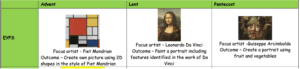
Year 1 and 2 Overview
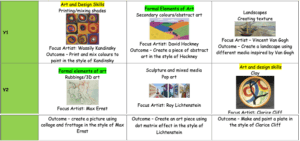
Year 3 and 4 Overview
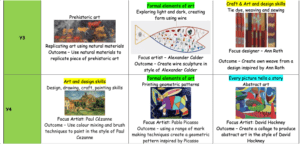
Year 5 and 6 Overview
The National Curriculum states that:
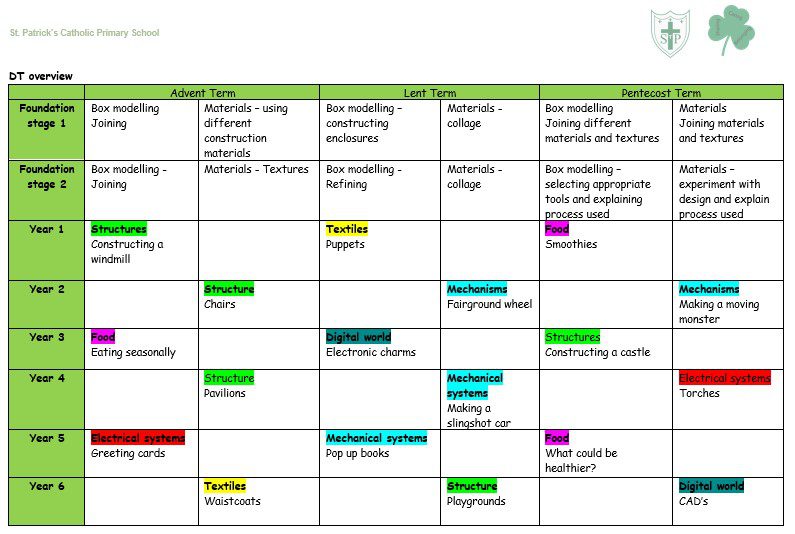
“Design and technology is an inspiring, rigorous and practical subject. Using creativity and imagination, pupils design and make products that solve real and relevant problems within a variety of contexts, considering their own and others’ needs, wants and values. They acquire a broad range of subject knowledge and draw on principles such as mathematics, science, engineering, computing and art. Pupils learn how to take risks,
becoming resourceful, innovative, enterprising and capable citizens. Through the evaluation of past and present design and technology, they develop a critical understanding of its impact on daily life and the wider world. High-quality design and technology education makes an essential contribution to the creativity, culture, wealth and well-being of the nation.”
Intent
At St Patrick’s RC Primary School our curriculum for art and design aims to ensure that all pupils:
- Develop the creative, technical and practical expertise needed to
perform everyday tasks confidently and to participate in an increasingly
technological world. - Build and apply a repertoire of knowledge, understanding and skills in
order to design and make high-quality prototypes and products for a wide range of users. - Critique, evaluate and test their ideas and products and the work of
others. - Understand and apply the principles of nutrition and learn how to cook.
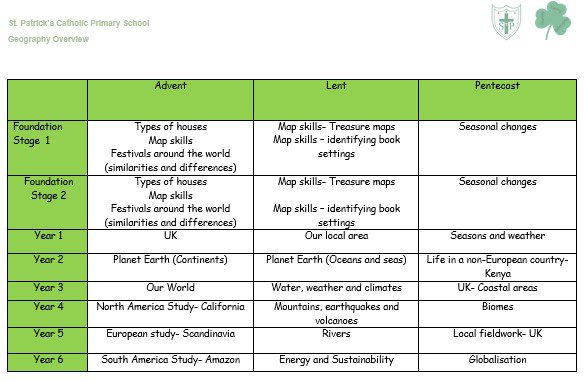
At St Patrick’s Catholic School our curriculum for geography aims to ensure that all pupils are taught locational knowledge, place knowledge, human and physical geography and the skills and fieldwork to apply this knowledge.
The progression framework shows the key knowledge and skills which the children will be proficient in by the end of each year group. These are taught through topics which allow the children to apply their skills by answering an enquiry question.
The National Curriculum states that:
“A high-quality geography education should inspire in pupils a curiosity and fascination about the world and its people that will remain with them for the rest of their lives. Teaching should equip pupils with knowledge about diverse places, people, resources and natural and human environments, together with a deep understanding of the Earth’s key physical and human processes.
As pupils progress, their growing knowledge about the world should help them to deepen their understanding of the interaction between physical and human processes, and of the formation and use of landscapes and environments. Geographical knowledge, understanding and skills provide the frameworks and approaches that explain how the Earth’s features at different scales are shaped, interconnected and change over time.”
Useful Websites
https://www.natgeokids.com/uk/teacher-category/geography/
https://www.bbc.co.uk/bitesize/subjects/z2f3cdm
https://www.geography.org.uk/teaching-resources/early-years-and-primary-resources
www.geography-map-games.com/
https://www.scoilnet.ie/primary/theme-pages/geography/
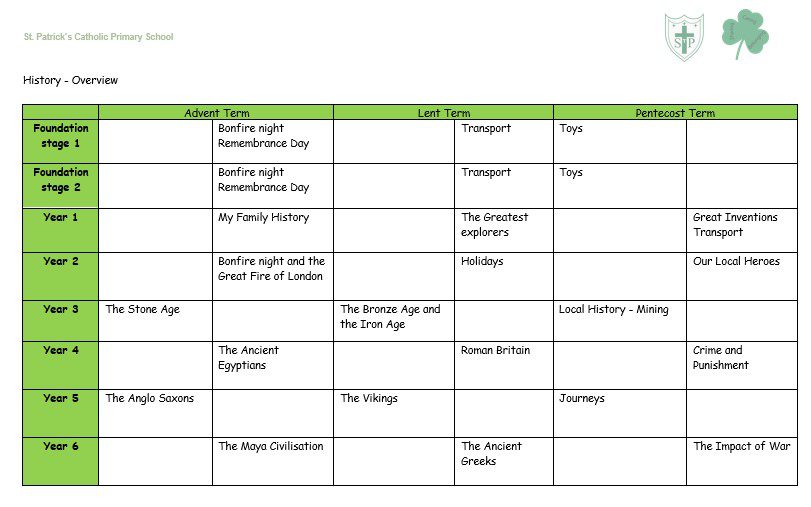
At St Patrick’s Catholic School our curriculum for history aims to ensure that all pupils in key stage 1 are taught history which is within living memory, beyond living memory, lives of significant people and local history. Pupils in key stage 2 pupils are taught: British history chronologically from the Stone age to 1066; History in Britain beyond 1066; Local history; Ancient History not British between the stone age and 1066; Civilizations from 1000 years ago and Ancient Greece.
The progression framework shows the key knowledge and skills which the children will be proficient in by the end of each year group. These are taught through topics which allow the children to apply their skills by answering an enquiry question.
The National Curriculum states that:
“A high-quality history education will help pupils gain a coherent knowledge and understanding of Britain’s past and that of the wider world. It should inspire pupils’ curiosity to know more about the past. Teaching should equip pupils to ask perceptive questions, think critically, weigh evidence, sift arguments, and develop perspective and judgement. History helps pupils to understand the complexity of people’s lives, the
process of change, the diversity of societies and relationships between different groups, as well as their own identity and the challenges of their time.”
Useful Websites
The following websites have many different activities for people and places in the past.
https://www.history.org.uk/primary/resource/3620/primary-topic-websites
http://www.primaryhomeworkhelp.co.uk/history/index.html
https://www.bbc.co.uk/history/forkids/
https://www.bbc.co.uk/bitesize/subjects/z7svr82
https://www.historyforkids.net/
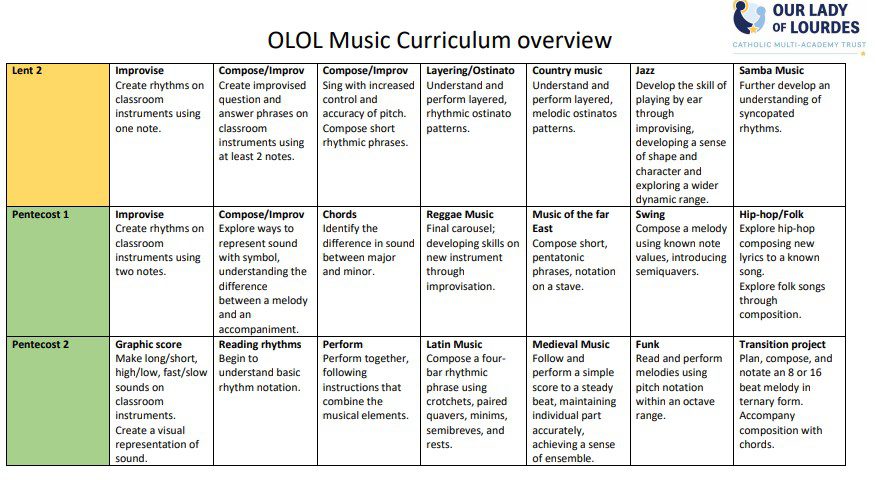
At St Patrick’s our whole class music lessons are provided by the OLOL music services.
Olol music curriculum overview 1
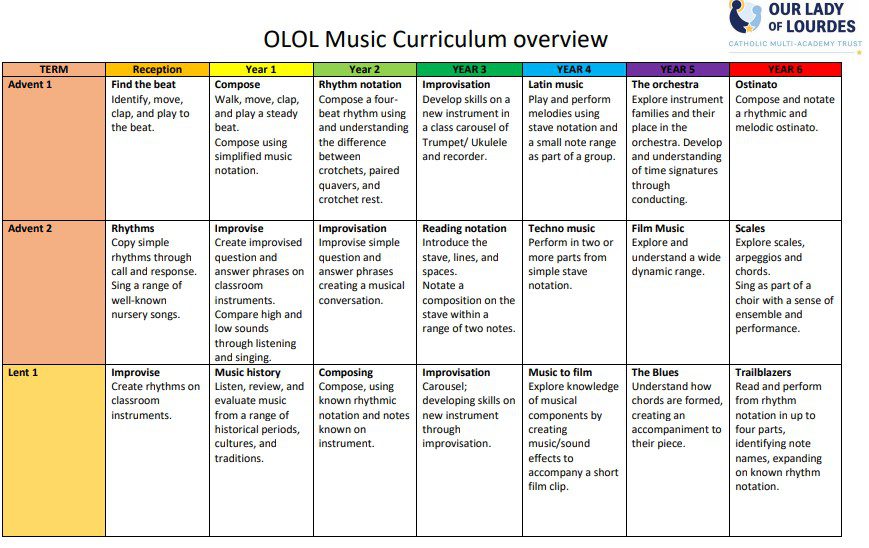
Olol music curriculum overview 2